


Three Steps to Craft Your AI Strategy Development
Artificial intelligence is no longer a futuristic concept. It’s here, reshaping industries and redefining how businesses operate. But how do you harness this power effectively? How do you create an AI strategy development plan that propels your organization forward instead of leaving you overwhelmed? I’m here to guide you through three essential steps to craft your AI strategy with confidence and clarity.
Understand Your Business Needs and AI Potential
Before diving into AI tools and technologies, pause and ask yourself: What problems am I trying to solve? AI is a tool, not a magic wand. You need to identify where AI can add real value to your operations.
Start by mapping out your current processes. Look for repetitive tasks, data-heavy workflows, or areas where decision-making could be faster and more accurate. For example, if your customer service team spends hours answering common questions, AI-powered chatbots could free up their time for more complex issues.
Next, evaluate your data. AI thrives on data, but not all data is created equal. Do you have clean, accessible, and relevant data? If not, invest time in data preparation. This step is crucial because AI models learn from data patterns, and poor data quality leads to poor outcomes.
Finally, set clear objectives. Are you aiming to increase efficiency, improve customer experience, or innovate your product offerings? Defining measurable goals will keep your AI strategy focused and aligned with your business vision.
Actionable tip: Create a simple matrix listing business challenges on one axis and potential AI solutions on the other. This visual will help you prioritize where to start.

Build a Roadmap for AI Strategy Development
Once you understand where AI fits in your business, it’s time to build a roadmap. This plan will guide your AI journey step-by-step, ensuring you stay on track and make informed decisions.
Start by selecting pilot projects. Choose initiatives that are manageable in scope but have the potential for significant impact. For instance, automating invoice processing or enhancing product recommendations with AI can be excellent starting points.
Next, assemble your team. AI strategy development requires collaboration between business leaders, data scientists, IT professionals, and end-users. Each brings a unique perspective that will shape your AI solutions.
Don’t forget to consider technology infrastructure. Will you use cloud-based AI services, on-premises solutions, or a hybrid approach? Your choice will affect scalability, security, and cost.
Set milestones and KPIs to measure progress. Regularly review these metrics to adjust your strategy as needed. Flexibility is key because AI projects often evolve as you learn more.
Actionable tip: Use a Gantt chart or project management tool to visualize your AI roadmap, including timelines, responsibilities, and checkpoints.
Leverage Expert Guidance and Continuous Learning
AI is complex and fast-moving. You don’t have to go it alone. Engaging with ai strategy consulting can provide you with expert insights, best practices, and tailored solutions that accelerate your AI adoption.
Consultants bring experience from diverse industries and can help you avoid common pitfalls. They assist in aligning AI initiatives with your business goals, ensuring you get the most value from your investment.
Moreover, AI is not a one-time project. It requires continuous learning and adaptation. Stay updated on emerging AI trends, tools, and ethical considerations. Encourage your team to develop AI skills through training and workshops.
Remember, AI success is a journey, not a destination. Embrace experimentation, learn from failures, and celebrate wins.

Integrate AI Seamlessly into Your Operations
With a clear roadmap and expert support, focus on integrating AI into your daily operations. This step is about making AI part of your business DNA.
Start small but think big. Implement AI solutions that solve immediate problems but keep scalability in mind. For example, if you deploy an AI-powered customer support chatbot, design it to handle increasing volumes and integrate with other systems like CRM.
Ensure your team is ready. Change management is critical. Communicate the benefits of AI clearly and provide training to ease the transition. Address concerns openly to build trust.
Monitor AI performance continuously. Use analytics to track how AI impacts your KPIs and user satisfaction. Be ready to tweak algorithms or processes based on feedback.
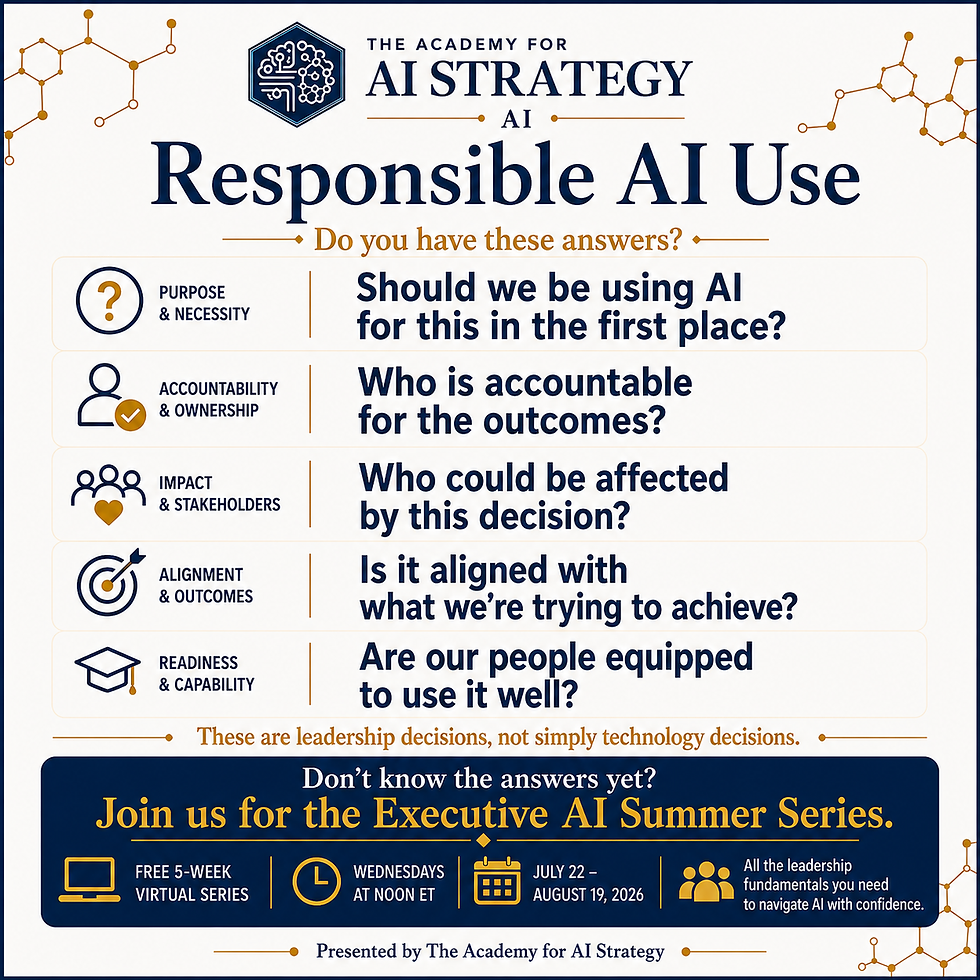
Finally, maintain ethical standards. AI should enhance human work, not replace it unfairly. Be transparent about AI use and protect customer data rigorously.
Actionable tip: Develop an AI governance framework that outlines roles, responsibilities, and ethical guidelines for AI use in your organization.
Embrace the Future with Confidence and Vision
Crafting your AI strategy development is not just about technology. It’s about transforming your mindset and business culture. AI offers unprecedented opportunities to innovate, compete, and grow. But only if you approach it strategically.
Take these three steps seriously: understand your needs, build a clear roadmap, and seek expert guidance. Combine them with ongoing learning and ethical integration, and you’ll position yourself at the forefront of the AI revolution.
Are you ready to unlock AI’s full potential? The future belongs to those who prepare today. Start crafting your AI strategy now and watch your business soar to new heights.
By following this structured approach, you’ll not only implement AI effectively but also create lasting value that drives growth and efficiency. Remember, AI is a powerful ally when wielded with purpose and precision. Let’s make it work for you.


Comments